
Back to standard tunerBARITONE TUNING · D3 G3 B3 E4

Free Online Baritone Ukulele Tuner

Tune your baritone ukulele to standard DGBE tuning with live microphone feedback or clear reference tones. This tuner listens for D3, G3, B3 and E4, shows whether each string is flat or sharp, and processes microphone audio on your device.

01

How to Use the Baritone Ukulele Tuner

1. Select Baritone DGBE tuning

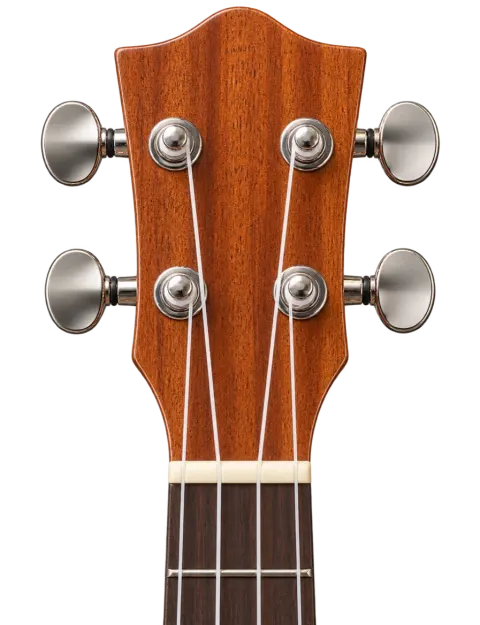
A baritone ukulele is normally tuned D3, G3, B3 and E4, ordered from the fourth string nearest your face to the first string nearest the floor when you hold the instrument in a standard right-handed position. Before you begin, make sure the tuner is set to Baritone DGBE. Standard GCEA and Low-G modes listen for different target notes and are not suitable for an ordinary baritone string set.

Choose Guided mode if you are new to tuning or if a string is far from its target. Guided mode lets you select the string you intend to tune, which helps the detector ignore nearby notes and overtones. Auto detect is convenient after the instrument is already close to pitch and you know the four open-string notes.
2. Start the microphone and play one string

Press Start microphone and allow access when the browser asks. Pluck one open string gently and let it ring. The tuner compares the sound with the selected target and shows whether the string is too low, too high or in tune. Audio is analyzed on your device and is not uploaded by this tuner.

Tune in a quiet room and mute the other strings with your picking hand. Sympathetic vibration from the ukulele body can make an unused string ring, while fans, conversations and music can compete with the note you want to measure. A clean, moderate pluck usually gives a steadier reading than a hard attack because the beginning of a note contains stronger overtones.

3. Adjust the peg in small movements

If the display says the note is flat or too low, tighten the correct tuning peg a little. If it says sharp or too high, loosen the peg. Pluck again after every small adjustment and wait for the reading to settle. The thinner B and E strings react quickly to peg movement, so avoid large turns.

For a stable final adjustment, approach the target from below. If a string is sharp, loosen it slightly below the target and then tighten it back into tune. This helps remove slack around the tuning post. Stop if the tension feels unusual or the pitch rises far above the intended octave.

4. Check D, G, B and E again

Tune the fourth string to D3, the third to G3, the second to B3 and the first to E4. After the first pass, repeat the sequence. Changing the tension of one string can slightly affect the others, especially after a large adjustment or when the strings are new.

Play a few familiar chords, listen for beating or sour notes and make one final pass with the baritone ukulele tuner. A display that moves by a few cents while the note fades is normal. Aim for a stable reading near the center instead of trying to freeze every number at exactly zero.

02

Standard Baritone Ukulele Tuning: D3 G3 B3 E4

String positionTarget noteFrequencyFunction
4th, nearest your faceD3146.83 HzLowest open string
3rdG3196.00 HzA perfect fourth above D3
2ndB3246.94 HzA major third above G3
1st, nearest the floorE4329.63 HzHighest open string

These frequencies use A4 = 440 Hz, the common reference pitch used by most electronic tuners. The letter identifies the note and the number identifies its octave. That octave matters when a string is far out of tune or when you install a new set: a tuner can display the correct letter even when the pitch is an octave too high or too low.

03

Why Does a Baritone Ukulele Use DGBE?

A baritone ukulele usually has a longer scale length and larger body than a soprano, concert or tenor ukulele. Its standard DGBE tuning gives it a lower, warmer range that suits the instrument’s size and normal string tension.

D3, G3, B3 and E4 are the same notes as the four highest strings of a guitar in standard tuning. Guitar players will therefore recognize many familiar fingering shapes. The sounding chord names are not the same as they are on a GCEA ukulele, however, so a familiar shape should be identified by its baritone notes rather than by its standard-ukulele name.

Standard baritone tuning is linear: each open string rises in pitch from the low D to the high E. This differs from common High-G ukulele tuning, where the fourth string is raised into the upper register. The linear sequence supports bass movement, fingerstyle patterns, melody playing and guitar-like chord voicings.

Alternative tunings exist, but DGBE is the correct starting point for a normal baritone string set. Use strings made for baritone scale length and the intended tuning. Strings designed for soprano, concert or tenor GCEA may have unsuitable length, diameter or tension and should not be forced to baritone pitches.

04

Tips for Accurate Baritone Ukulele Tuning

  • Confirm both the note name and octave. D3 is lower than D4, and G3 is one octave below the G4 used in standard High-G ukulele tuning.
  • Pluck one open string at a time and mute the other three. This reduces sympathetic vibration and helps the microphone isolate the fundamental pitch.
  • Watch the reading after the initial attack settles. A hard pluck can briefly emphasize overtones or pull the pitch sharp before the string stabilizes.
  • Turn the correct tuning peg in small increments. If the pitch moves in the wrong direction, reverse the turn instead of relying on a memorized peg direction.
  • Recheck every string after tuning all four. Changes in total string tension can move a previously tuned string slightly away from its target.
  • Use the built-in D3, G3, B3 and E4 reference tones when microphone access is unavailable or when you want to practise matching pitch by ear.

Reference tones are especially useful for ear training. Play one tone, stop it and then pluck the matching string. When two nearby pitches sound together, you may hear a pulse or wavering called beating. The pulse slows as the pitches approach each other and nearly disappears when they match. Use moderate speaker volume so the device hears the instrument rather than its own reference tone.

Check the tuning whenever you pick up the instrument. Temperature, humidity, transport, playing pressure and normal string stretching can all change pitch. Recheck after attaching a capo because its pressure may pull notes slightly sharp. Regular tuning is normal maintenance and does not by itself indicate a fault with the ukulele.

05

Baritone Ukulele Tuner Troubleshooting

The detected note keeps jumping

Reduce background noise, move closer to the microphone and pluck more gently. Mute the unused strings and wait for one note to fade before playing the next. Auto detect works best when the instrument is already reasonably close to DGBE.

The tuner shows the right letter but the wrong octave

Check the complete target: standard baritone tuning requires D3, G3, B3 and E4. Do not keep tightening merely because the letter is correct. Compare the string with its reference tone before making a large change.

A string repeatedly goes flat

New strings stretch and may need several tuning passes during their first playing sessions. Persistent slipping can also mean that the string is not secured properly at the bridge or tuning post. Tune it again and inspect how it is installed.

The microphone does not respond

Check the browser’s site permissions and make sure another application is not using the microphone. Reload the page after granting access. You can still tune with the four reference-tone buttons if a microphone is unavailable.

Open strings are correct but fretted notes sound wrong

First confirm the open-string tuning with a fresh reading. Large differences on fretted notes may come from pressing too hard, worn strings, high action or an intonation problem. Replace old strings or ask a qualified repair technician to inspect the instrument if the issue continues across the neck.

BARITONE QUESTIONS

Baritone Ukulele Tuning FAQ

What is the standard tuning for a baritone ukulele?

Standard baritone ukulele tuning is D3, G3, B3 and E4, from the fourth string nearest your face to the first string nearest the floor in a normal right-handed playing position.

Is baritone ukulele tuning the same as guitar tuning?

It matches the four highest-pitched strings of a six-string guitar in standard tuning. A baritone ukulele does not include the guitar’s low E2 and A2 strings.

Can I tune a baritone ukulele to GCEA?

Only use GCEA when the instrument is fitted with strings designed for that tuning and scale length. Do not tune a normal DGBE baritone string set up to GCEA without confirming that the strings and instrument support it.

Can I use this baritone ukulele tuner on a phone?

Yes. It works in a modern mobile browser with microphone permission. If you prefer not to use the microphone, play the built-in D3, G3, B3 and E4 reference tones instead.

How often should I tune a baritone ukulele?

Check the tuning before each practice or performance and whenever the instrument sounds wrong. New strings, temperature changes, transport and energetic playing can all move the pitch.

Why does a baritone ukulele use DGBE?

Its longer scale and larger body suit a lower range. DGBE creates a linear low-to-high sequence and gives the instrument the same open notes as the highest four strings of a standard guitar.